

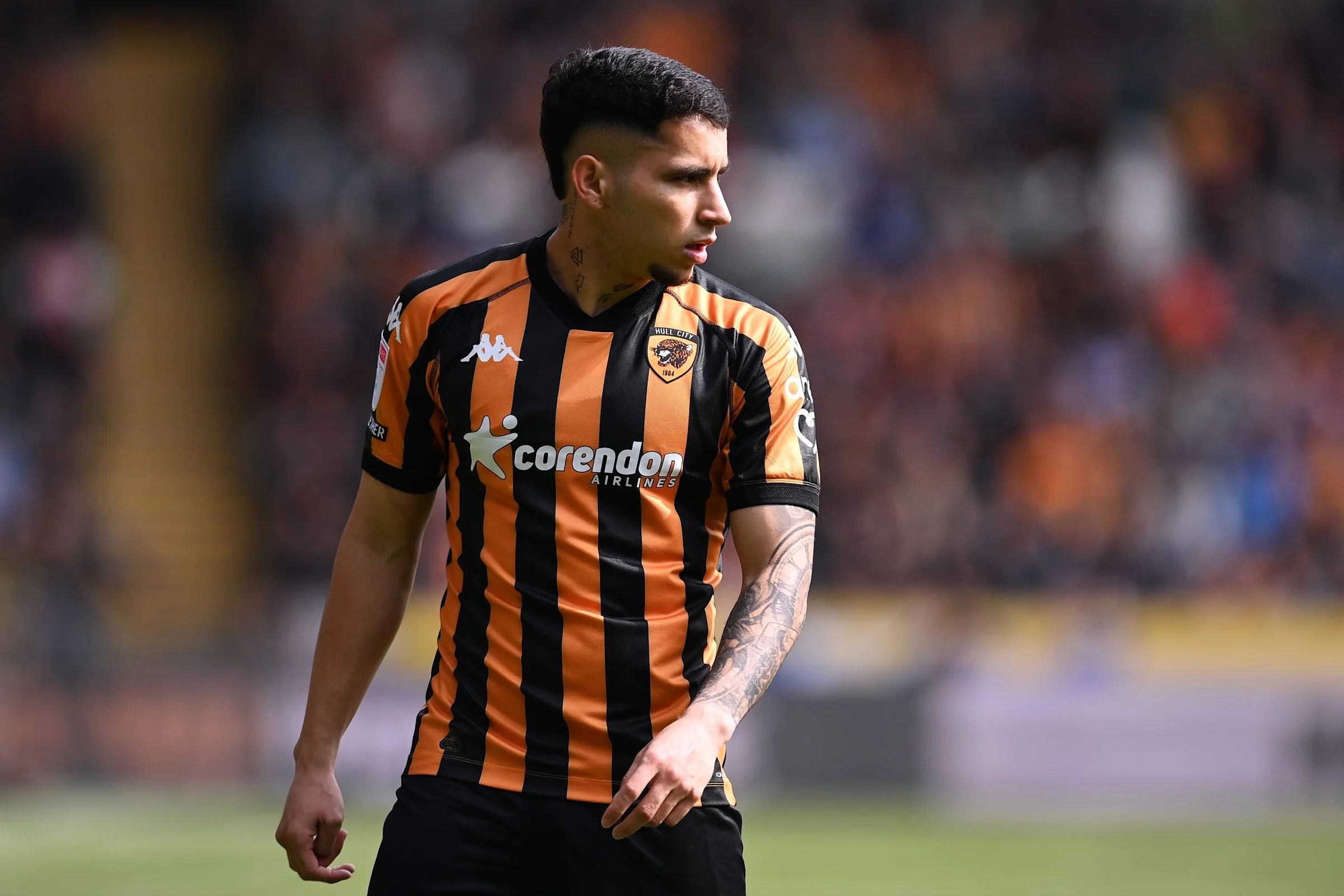
The Gustavo Puerta haircut is best described as a short textured crop with a low-to-mid skin fade. It combines closely faded sides, a slightly longer top, forward texture and a clean finish around the temples and neckline.
The Colombian footballer has worn several closely related versions of this style. In some appearances, the top resembles a short crew cut. In others, the visible fringe and forward movement make it look more like a textured French crop.
The safest way to recreate it is to show your barber a recent front and side photograph while asking for a short textured crop with a blended skin fade.
Gustavo Puerta Haircut Quick Facts
Table of Contents
| Haircut detail | Description |
|---|---|
| Haircut name | Short textured crop with a skin fade |
| Alternative name | Textured crew cut or short French crop |
| Fade height | Low-to-mid fade |
| Top length | Approximately ¾ to 1¼ inches |
| Sides | Faded from skin or a very short clipper setting |
| Fringe | Short, natural and slightly uneven |
| Hairline | Clean but not excessively sharp |
| Styling finish | Matte and lightly textured |
| Maintenance | Barber visit every two to three weeks |
| Best hair types | Straight, thick or slightly wavy hair |
What Is Gustavo Puerta’s Haircut Called?
Gustavo Puerta’s haircut is a short textured crop with a low-to-mid skin fade.
The hairstyle does not have one exclusive celebrity name. A barber may also recognize it as:
- A short French crop
- A textured crew cut
- A cropped top with a mid fade
- A short Caesar crop with a skin fade
- A low fade with a textured fringe
The distinction depends on the photograph being used. When Puerta leaves slightly more length at the front and brushes it forward, the haircut resembles a French crop. When the top is cut shorter and styled more naturally, it looks closer to a modern crew cut.
His professional photographs show short dark hair, compact texture on top and gradually faded sides. A barber reel specifically showing the recreation of Puerta’s haircut also confirms that the style is being requested as a recognizable footballer-inspired cut.
The Main Features of the Gustavo Puerta Hairstyle
The haircut looks simple, but several details create its distinctive finish.
Short Textured Hair on Top
The top is kept short enough to remain controlled during training and matches. However, it is not cut to one completely uniform length.
The barber leaves enough hair to create visible separation and texture. The hair is usually directed slightly forward rather than brushed upward into a quiff.
A suitable top length is approximately ¾ to 1¼ inches, depending on hair density and the version of the haircut being copied.
People with thick hair may need additional texturizing to prevent the top from appearing heavy. Fine hair can be left slightly longer to create the appearance of greater density.
Low-to-Mid Skin Fade
The sides and back gradually transition from very short hair near the ears to the longer section above.
In different photographs, Puerta’s fade appears to sit between a low and mid position. It begins close to the temple area and becomes fuller before reaching the upper sides.
This is not usually an extreme high fade. Leaving some weight around the upper sides helps maintain a balanced head shape and prevents the haircut from looking too narrow.
Short Natural Fringe
The front is short, lightly textured and slightly irregular. It does not form the heavy, completely straight fringe associated with some traditional French crops.
The fringe can be worn forward, slightly separated or pushed subtly to one side. This gives the haircut a more natural athletic appearance.
Clean Temple and Neckline Finish
The temple area is neatly shaped, but the line-up should not dominate the haircut. Puerta’s style works because the finish looks clean without appearing overly artificial.
Ask the barber to maintain your natural hairline wherever possible. An aggressive line-up can require more frequent maintenance and may look uneven as it grows.
What to Ask Your Barber
Use this script when requesting the Gustavo Puerta haircut:
I want a short textured crop similar to Gustavo Puerta’s haircut. Leave about one inch on top, add natural choppy texture and direct the front slightly forward. Give me a low-to-mid skin fade on the sides and back, blended smoothly into the top. Keep the fringe short and finish the temples and neckline cleanly without pushing the natural hairline back.
Showing photographs remains important because fade terminology varies between barbers. One barber’s low fade may resemble another barber’s mid fade.
Professional barbers also adjust the height of a fade according to the client’s face shape, hair density and desired overall style. Mid fades are particularly versatile with short hairstyles, while low fades retain more weight around the sides.
Gustavo Puerta Haircut Length Guide
The following measurements can be used as a starting point rather than strict rules.
| Section | Suggested length |
|---|---|
| Front of top | 1 to 1¼ inches |
| Crown | ¾ to 1 inch |
| Upper sides | No. 2 to No. 3 guard |
| Middle fade | No. 1 to No. 1½ guard |
| Lower fade | No. 0, trimmer or skin |
| Sideburns | Faded into the skin |
| Neckline | Naturally tapered or cleanly edged |
Hair texture changes how these lengths appear. Coarse or thick hair can look fuller at one inch, while fine hair may need slightly more length.
Your barber should also adapt the fade to your head shape rather than following clipper numbers mechanically.
How the Barber Creates the Cut
A barber will normally begin by establishing the shortest part of the fade around the lower sides and neckline.
The first guideline is placed low or around the middle of the temple area. The barber then uses progressively longer clipper guards to remove visible lines and blend the fade into the upper sides.
The top is cut separately with scissors or clipper-over-comb. Point cutting creates small differences in length and prevents the hair from sitting like a solid block.
The front is shortened while retaining enough length to form a subtle textured fringe. The barber then checks the connection between the top and faded sides.
The cut is finished by cleaning the hair around the ears, temples and neckline.
For the closest result, request a smooth fade rather than a strongly disconnected undercut.
How to Style the Gustavo Puerta Haircut
This hairstyle requires little daily styling because the shape comes primarily from the haircut.
Step 1: Start With Damp Hair
Towel-dry the hair after washing. It should be slightly damp rather than dripping wet.
Step 2: Direct the Hair Forward
Use your fingers to move the top forward and slightly across the forehead. Avoid creating a perfectly flat fringe.
Step 3: Add a Matte Product
Use a small amount of matte clay, styling paste or texture cream. Warm the product between your palms before applying it.
Begin at the back of the top and move toward the front. Starting directly at the fringe can deposit too much product in one area.
Step 4: Separate the Texture
Pinch small sections with your fingertips to create natural separation. The finish should look controlled but not glossy or rigid.
A heavy gel is unnecessary. It can flatten the texture and make the hairstyle look wet.
Best Products for This Hairstyle
Choose the styling product according to your hair type.
| Hair type | Recommended product |
|---|---|
| Thick hair | Strong matte clay |
| Straight hair | Texture paste or matte cream |
| Fine hair | Lightweight texture powder |
| Slightly wavy hair | Light styling cream |
| Dry hair | Moisturizing matte paste |
| Oily hair | Texture powder or dry-finish clay |
Use only a small amount. Short hair can quickly become greasy or stiff when too much product is applied.
Who Does the Gustavo Puerta Haircut Suit?
This haircut works particularly well for people who want a sharp style without lengthy daily maintenance.
Oval Faces
An oval face can wear either the low-fade or mid-fade version. Most top lengths will remain balanced.
Round Faces
A mid fade with slightly more texture and height on top can make a round face look longer. Avoid making the fringe too heavy or completely flat.
Square Faces
The close sides can emphasize a strong jawline. Keep some softness in the fringe so the haircut does not appear excessively severe.
Long Faces
Choose a lower fade and wear the top forward. Avoid adding excessive height, which can make the face appear longer.
Receding Hairlines
The short forward texture can help reduce the contrast around mildly receding corners. Ask for an irregular, natural fringe instead of a perfectly straight line.
The haircut is less suitable for someone who prefers long styling options or does not want regular fade maintenance.
Gustavo Puerta Haircut Variations
Puerta’s hair has not remained identical throughout every stage of his career. These are the closest variations readers can consider.
Textured Crop With Mid Skin Fade
This is the most recognizable version. It has visible texture on top, short forward movement and a clean fade beginning around the middle of the sides.
Choose this version for a sharper and more defined result.
Short Crew Cut With Low Fade
In some photographs, Puerta wears the top shorter and with less visible fringe. This version resembles a crew cut combined with a low fade.
It is the easiest option to style and works well for active lifestyles.
French Crop With Blunt Fringe
The front can be left slightly heavier and cut into a clearer horizontal fringe. This makes the hairstyle look more like a traditional French crop.
It offers more coverage across the forehead but requires careful trimming.
Textured Top With Tapered Sides
People who do not want exposed skin can replace the skin fade with a No. 0.5 or No. 1 taper.
This creates a softer version while preserving the overall Gustavo Puerta hairstyle.
How Often Should You Get It Cut?
A skin fade usually looks sharpest during the first one or two weeks.
Book a haircut every two to three weeks to maintain the clean contrast around the sides. People who prefer a slightly grown-in appearance can wait three to four weeks.
The top may only require reshaping every second visit. Ask the barber to clean the fade without removing unnecessary length from the top.
Regular maintenance should include:
- Cleaning around the ears and neckline
- Reblending the lowest section of the fade
- Removing excess weight from the upper sides
- Lightly trimming the fringe
- Restoring texture through the top
How to Choose the Right Reference Photo
Do not rely on a single front-facing headshot. A barber needs to see how the fade connects around the ears and back of the head.
Bring at least two images:
- A clear front or three-quarter photograph showing the fringe and top
- A side photograph showing the height and blend of the fade
Use images from the same period whenever possible. Combining a short crew-cut photograph with a longer textured-crop photograph may give the barber conflicting instructions.
The most useful reference image has good lighting, minimal motion blur and a clear view of the hairline.
Is the Gustavo Puerta Haircut Easy to Maintain?
Yes. The hairstyle is easy to style each morning, but the fade requires regular barber visits.
The short top does not need blow-drying or complicated product application. Most people can style it in less than two minutes.
Its main advantages include:
- Minimal daily styling
- A clean athletic appearance
- Good control for thick hair
- Compatibility with several face shapes
- Easy adaptation into a crew cut or French crop
- A neat shape during sports and physical activity
The main disadvantage is that a skin fade loses its sharp appearance relatively quickly.
Final Verdict
The Gustavo Puerta haircut is a short textured crop with a low-to-mid skin fade, natural forward movement and a clean finish around the temples.
Ask your barber to leave approximately one inch on top, create choppy texture, keep the fringe short and blend the sides down to the skin. Bring clear front and side photographs because Puerta has worn both textured-crop and shorter crew-cut variations.
The result is a practical football-inspired hairstyle that looks sharp without requiring a complicated styling routine.
