

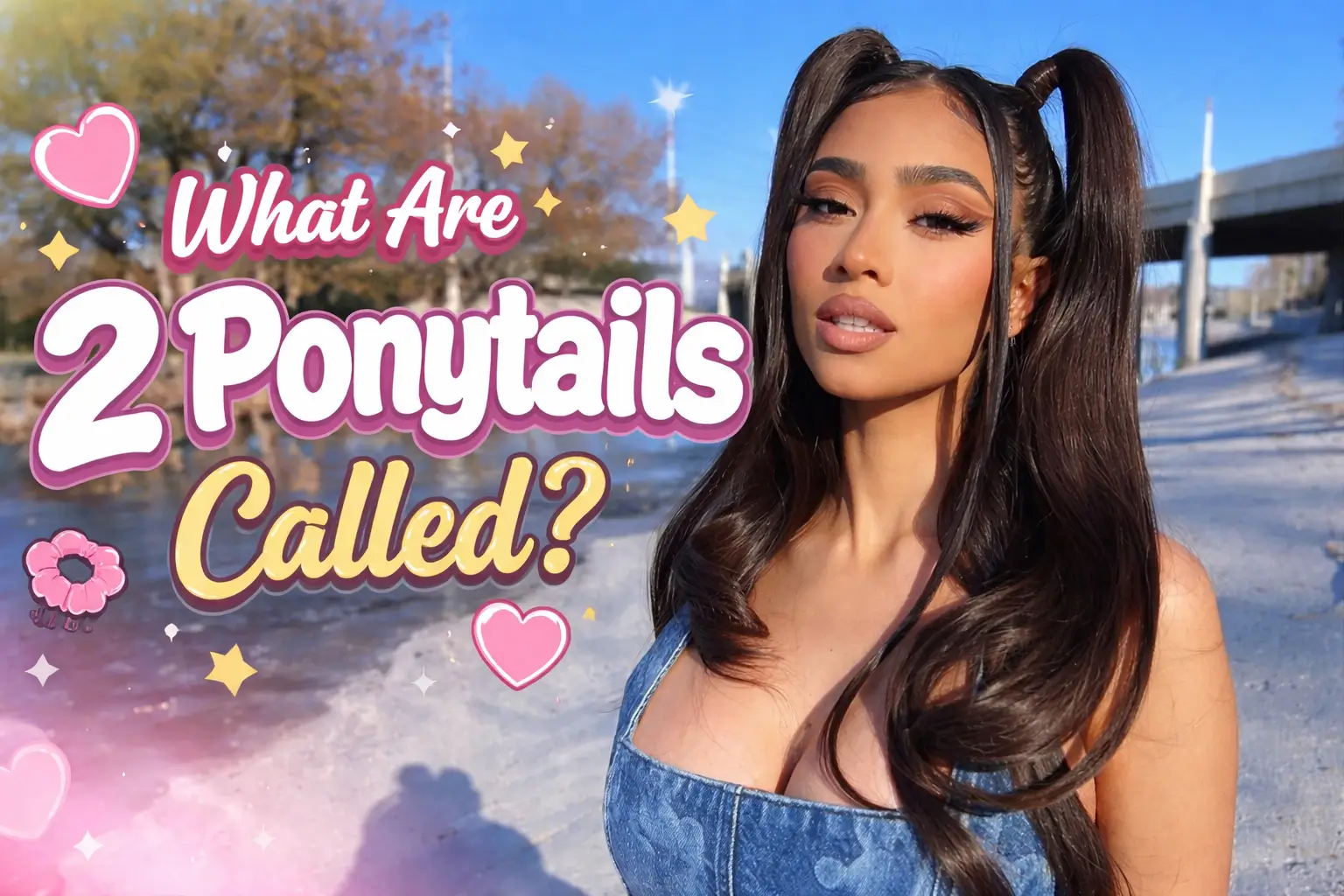
What are 2 ponytails called? In most cases, the answer is pigtails. When hair is split into two sections and tied on opposite sides of the head, that’s the name most people, especially in the U.S.—use without a second thought. High or low, braided or loose, two ponytails are most commonly called pigtails.
But that’s only the starting point. Depending on where you are in the world, the same hairstyle can have a completely different name.
The Most Common Answer: Pigtails
Table of Contents
In most English-speaking countries, especially the United States, two ponytails are called pigtails. If you said, “She’s wearing her hair in pigtails,” almost everyone would picture two symmetrical sections of hair, one on each side of the head.
Historically, “pigtails” referred more specifically to braided hair, but modern usage has loosened up. These days, pigtails can be braided, twisted, or completely loose. High or low, neat or messy—it still counts.
What’s funny is that the word didn’t start out feminine or cute at all. “Pigtail” originally referred to tightly twisted tobacco in the 1600s. Later, it was used to describe the long, greased braids worn by European sailors and soldiers. Only in the 19th century did the term drift into childhood hairstyles, eventually landing where we are now.
So if you’re looking for the safest, most universally understood answer to what are 2 ponytails called, pigtails is it.
Bunches: Same Hair, Different Accent
If you grew up in the UK—or parts of Australia—you might hear something different. There, “bunches” is the everyday word for two loose ponytails.
This is one of those regional language quirks that catches people off guard. In British English, “pigtails” often implies that the hair is braided, while “bunches” means the hair is tied but left loose. Say “bunches” in the US, though, and you’ll probably get a confused look.
Neither version is more correct. It’s just language doing its thing.
Twintails and Pop Culture Influence
In Japan, and in anime, gaming, and cosplay communities worldwide, two ponytails are often called twintails. The term comes from the Japanese pronunciation tsuin teeru, and it usually refers to long, high ponytails, often worn higher on the head than traditional pigtails.
If you’ve ever seen Hatsune Miku, you already know the look. Twintails are exaggerated, expressive, and intentionally stylized. They’re not just a practical hairstyle; they’re part of a visual identity.
Japan even celebrates the style officially. February 2nd is recognized as Twin Tail Day, a small but telling sign of how iconic the look has become.
Slang Terms Like Dog Ears
Then there are the informal names, the ones people don’t always write down but still use in conversation. “Dog ears” or “doggie ears” is a casual slang term for two short, unbraided ponytails that stick out from the sides of the head.
You’ll hear this most often when talking about toddlers or very young kids, especially when the ponytails are small and playful rather than polished. It’s not a universal term, and it’s definitely informal, but it pops up often enough to be worth mentioning.
Cultural Names From Around the World
Once you zoom out globally, the naming gets even richer.
In parts of China, two buns or tied sections were historically called ox horns (niujiaotou). This hairstyle wasn’t just decorative; it signaled that a girl was unmarried. Hair, in this context, functioned almost like a social label.
In Brazil, especially around São Paulo, two ponytails are commonly called Maria Chiquinha. In Poland, the word kucyki translates literally to “little ponies” and refers to the same style.
Among many Indigenous Plains tribes, including the Lakota, two braids were traditionally worn by both men and women. These styles weren’t casual or childish—they carried cultural meaning, identity, and pride.
So while the question what are 2 ponytails called sounds simple, the answers are layered with history and culture.
Modern Variations You Hear About Today
Language also shifts with trends. As hairstyles evolve, new names stick.
Bubble pigtails describe two ponytails secured with multiple elastics down the length, creating a rounded “bubble” effect. This style shows up often in fashion editorials and on social media because it looks more intentional than a basic tie-and-go ponytail.
Half-up pigtails are exactly what they sound like: only the top half of the hair is divided into two ponytails, while the rest stays down. It’s casual, flattering, and everywhere right now.
Odango is a Japanese-influenced style where the ponytails are partially twisted into small buns, with the remaining hair left loose. If that sounds familiar, it’s because of Sailor Moon, who made the look globally recognizable.
You’ll also hear boxer braids mentioned in the same breath, even though they’re technically braids, not ponytails. The name took off after Hilary Swank wore the style in Million Dollar Baby, and it stuck.
So… What Should You Call Them?
Here’s the honest answer: context matters more than correctness.
If you’re speaking generally, “pigtails” works almost everywhere. If you’re in the UK and want to be precise, “bunches” might feel more natural. In anime or cosplay spaces, “twintails” signals that you know the culture. And in casual conversation, slang terms like “dog ears” might fit the mood better.
Language around hair is flexible because hair itself is personal. The same style can feel playful, practical, fashionable, or symbolic depending on who’s wearing it and why.
