

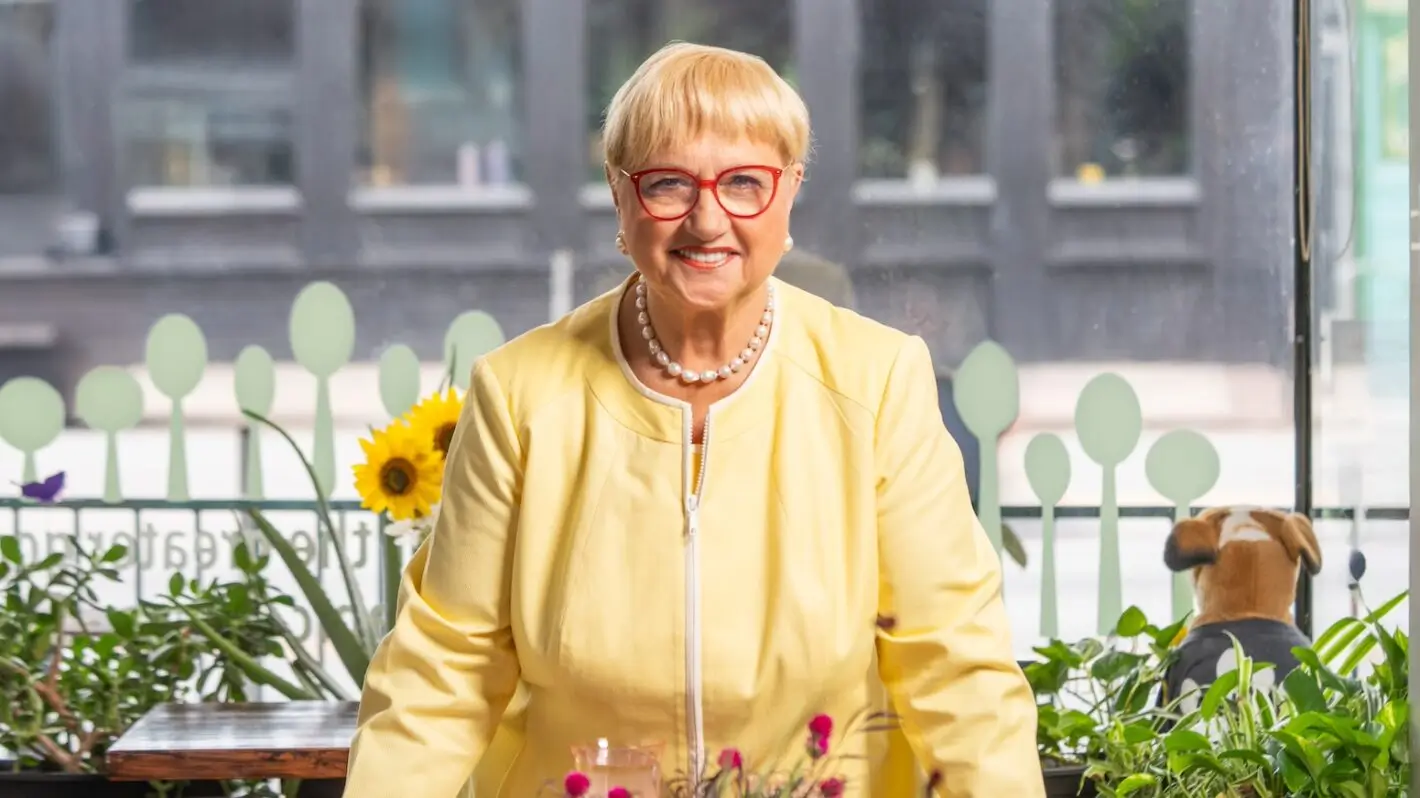
Lidia Bastianich, the Italian-American chef, restaurateur, and television host behind PBS programs like Lidia’s Kitchen, is known for wearing a structured short layered blonde bob designed for practicality, volume, and camera-ready polish.
The haircut combines a classic chin-length bob with internal texturizing and subtle layering that creates natural lift.
This style has remained consistent across her television career while she ran renowned restaurants such as Felidia and Becco. The consistency of the cut reflects both kitchen practicality and a classic Italian-American aesthetic.
From a technical standpoint, her hairstyle is not simply a short haircut. It is a carefully structured layered bob that creates fullness for mature hair while remaining extremely easy to maintain.
Technical Structure of Lidia Bastianich’s Haircut
Table of Contents
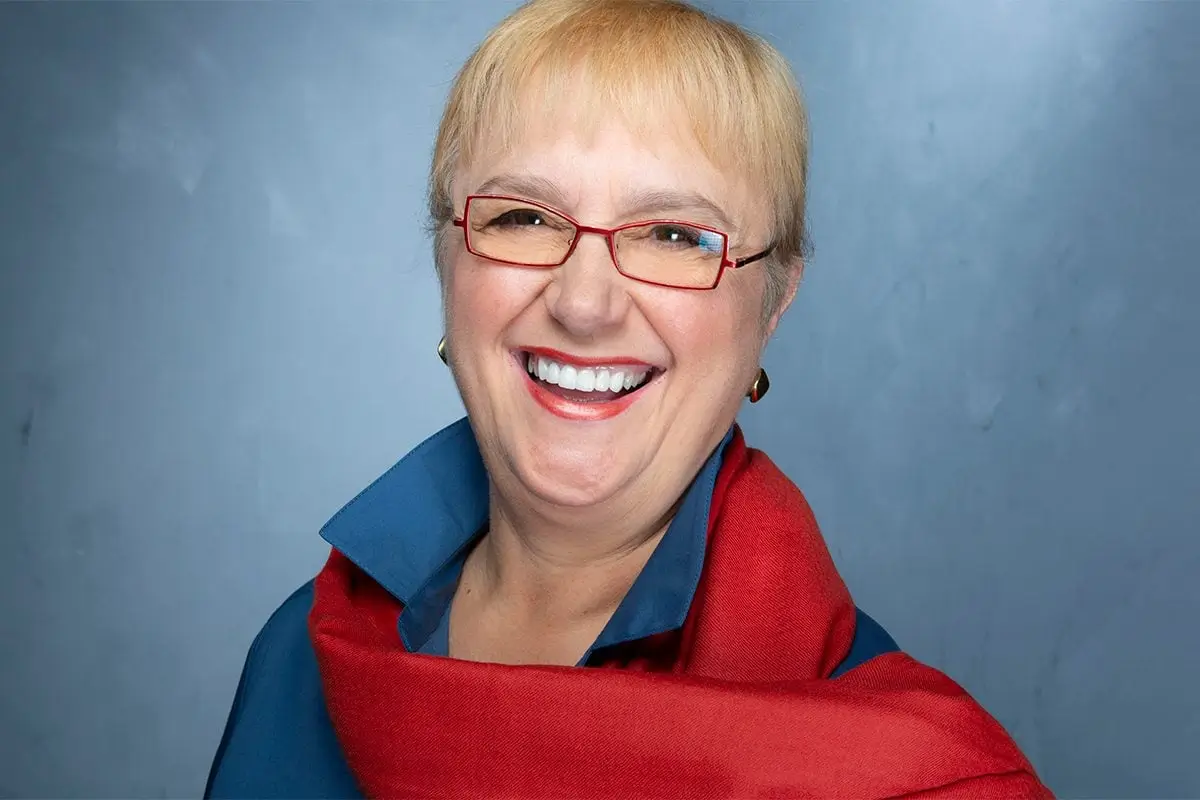
Professional stylists would classify Bastianich’s haircut as a graduated layered bob with internal texturizing. The goal of the cut is to maintain shape while preventing heaviness at the ends.
- Length: Typically rests at the chin or slightly above it.
- Perimeter Shape: A soft rounded bob rather than a sharp geometric line.
- Graduation Angle: Light graduation at approximately 30 degrees in the back to build subtle volume.
- Face Framing: Slightly shorter pieces around the temples that soften the jawline.
- Internal Layers: Hidden layers through the crown to create lift without visible stacking.
This structure keeps the silhouette compact and controlled. The rounded shape ensures the hair moves naturally while maintaining fullness at the crown.
Texturizing Techniques That Create Natural Volume
Hair that becomes finer with age benefits from internal texture rather than heavy layering. Stylists typically achieve the effect seen in Bastianich’s hairstyle using controlled texturizing techniques.
- Point Cutting: The stylist cuts vertically into the ends to remove weight and avoid blunt heaviness.
- Slide Cutting: Used lightly through the mid-lengths to soften the layers.
- Thinning Shears: Applied selectively through dense sections to improve movement.
- Crown Elevation: Hair is lifted while cutting to create height near the roots.
The result is a hairstyle that appears full but never bulky. This approach is particularly effective for mature women’s hairstyles because it supports natural texture instead of fighting it.
How the Cut Supports Mature Hair
Bastianich’s haircut is often referenced by stylists as a practical solution for women over 70 who want volume without complicated styling routines.
As hair ages, strands often become finer and lose density. Long hair can emphasize this by pulling weight downward. A short layered bob reverses the effect by concentrating volume closer to the scalp.
- Shorter length prevents flattening.
- Layered crown creates visual fullness.
- Rounded shape softens facial contours.
- Minimal styling reduces heat damage.
Because of these structural advantages, similar cuts are commonly recommended in salons for clients dealing with hair thinning or natural aging changes.
Styling Method Used on Television
The styling seen on camera during episodes of Lidia’s Kitchen follows a very simple routine. The look relies more on cut precision than on heavy styling products.
Typical styling steps used for this type of haircut include:
- Apply a lightweight volumizing mousse to damp roots.
- Blow-dry using a small round brush to lift the crown.
- Direct airflow upward at the roots to create structure.
- Finish with a soft side part and minimal shaping around the temples.
The result is a subtle root lift that holds throughout filming without appearing overly styled. This understated finish fits Bastianich’s approachable television presence.
Color Choice and Its Role in the Hairstyle
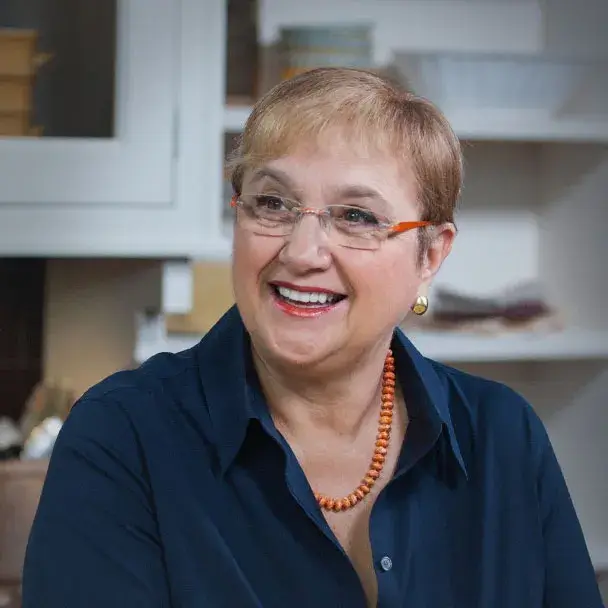
Bastianich’s hair color is typically described as a warm buttery blonde or honey blonde. The tone plays a practical role in how the haircut appears on screen.
Lighter hair shades reflect studio lighting more effectively than darker tones. This reflection enhances the visual texture created by layering and texturizing.
- Warm blonde tones brighten facial features.
- Highlights accentuate layered movement.
- Lighter color enhances volume under television lighting.
The color therefore complements the haircut structure rather than functioning purely as a cosmetic choice.
Why the Hairstyle Works in a Culinary Environment
In professional kitchens, practicality is essential. Chefs often prefer shorter hairstyles that remain controlled while cooking for long hours.
Bastianich built her culinary career through restaurant work before becoming a television personality. Operating restaurants such as Felidia and Becco required daily kitchen presence. A compact bob prevents hair from falling forward during food preparation and eliminates the need for constant adjustments.
The style also transitions easily between kitchen work and television production. It remains neat under studio lighting while still appearing natural.
Consistency as Personal Branding
Over decades of television appearances, Bastianich’s hairstyle has remained remarkably consistent. This stability has unintentionally become part of her visual brand.
Television personalities often evolve their appearance to follow trends. Bastianich’s choice to maintain a classic haircut communicates reliability and authenticity. The hairstyle reinforces her identity as a traditional Italian-American chef focused on food rather than celebrity image.
In visual media, consistency strengthens recognition. When audiences see the familiar short blonde bob, they immediately associate it with comforting Italian recipes and approachable culinary instruction.
The Bottom Line
Lidia Bastianich’s hairstyle is a technically structured chin-length layered bob designed to create crown volume while remaining simple to maintain. Internal texturizing, subtle graduation, and lightweight styling techniques give the cut its recognizable shape.
The result is a hairstyle that balances professionalism, practicality, and timeless style. It works equally well in a busy kitchen, on a television set, or during public culinary events, making it one of the most recognizable looks in modern food television.
