

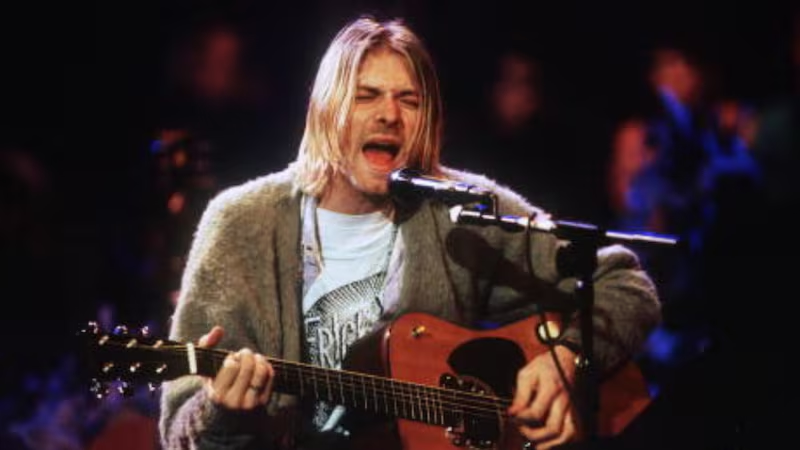
In 1992, Kurt Cobain went through a rapid series of hair transformations that mirrored the shift of Nirvana from underground icons to global rock stars. This was the year his style became fixed in pop culture memory. Short and aggressively dyed early on, then grown out into the shoulder-length blonde cut seen at the Reading Festival and the MTV Video Music Awards, Cobain’s 1992 hair defined the visual language of grunge.
This article breaks down each 1992 haircut chronologically, explains the technical details behind the look, and shows how to recreate it accurately today.
Early 1992: The Red and Pink Hair Era
Table of Contents
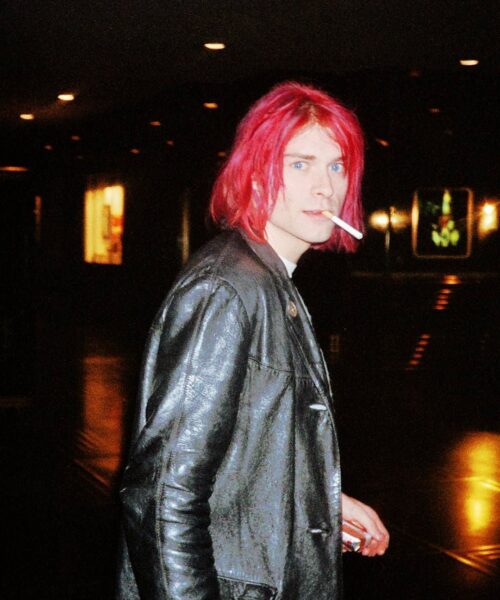
In early 1992, Kurt Cobain wore a short, choppy haircut dyed bright red or pink, most visible during Nirvana’s Japan tour and New York press appearances.
At the start of 1992, Cobain’s hair was cropped short and uneven, with a deliberately rough finish. The color ranged from fire-engine red to faded pink, depending on how recently it had been dyed and how much it had washed out. This was not a polished salon color. It was uneven, porous, and intentionally careless.
The cut itself sat above the ears and neckline, with jagged scissor work rather than clean lines. This look reinforced Cobain’s rejection of rock star polish just as Nirvana’s fame exploded. It was confrontational and temporary by design.
Mid 1992: The Bowl Cut Transition Phase
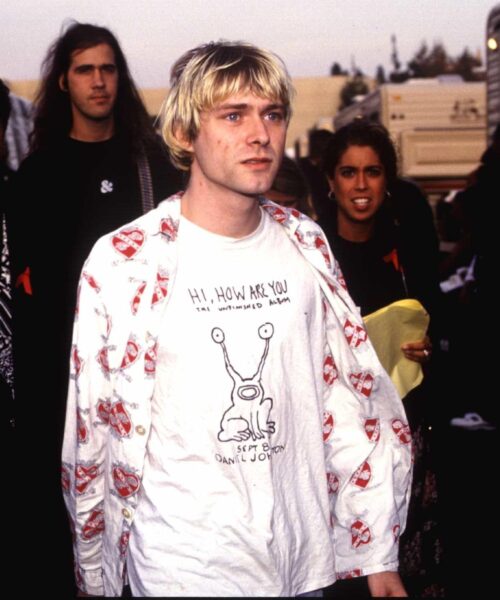
Around June 1992, Cobain grew his hair into a short, uniform shape often described as a bowl cut or long gent style with a heavy fringe.
As the dyed color faded and the hair grew, Cobain entered an awkward but important transition phase. The cut became more even in length, with the hair wrapping around the head and a fringe falling toward the eyes. It was not a classic bowl cut but shared the same rounded silhouette.
This stage mattered because it set the foundation for the longer blonde look that followed. The lack of aggressive layering allowed the hair to gain weight and movement as it grew. Photos from this period show less styling and more natural fall, which became a defining feature of his later 1992 appearance.
Late 1992: The Iconic Shoulder-Length Blonde
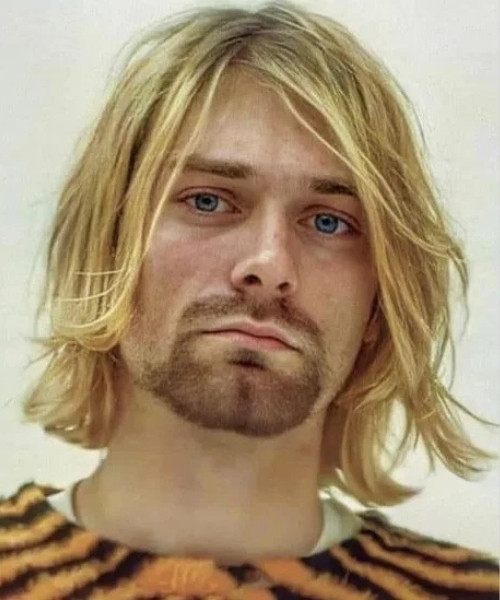
By August and September 1992, Kurt Cobain wore a shoulder-length, bleach-blonde long bob with choppy texture and wispy ends.
This is the haircut most people mean when they reference Kurt Cobain in 1992. The hair sat at or just above the shoulders and was bleached blonde to the point of visible damage. That damage was part of the appeal. It created separation, texture, and a soft, lived-in finish.
The cut was technically simple but visually distinctive. It was mostly one length, with subtle internal layers and light face-framing pieces around the chin and lips. The ends were point cut or lightly razored, giving them a jagged, airy look rather than a blunt edge.
At Reading Festival and the MTV VMAs, this haircut became permanently associated with Cobain’s image. It balanced vulnerability and defiance and perfectly matched the emotional tone of Nirvana’s music at the time.
Technical Breakdown of the 1992 Haircut
Kurt Cobain’s 1992 haircut was a one-length long bob with light internal layers, minimal tension, and choppy textured ends.
From a technical standpoint, this style relied on restraint. The foundation was a scissor cut that maintained weight at the perimeter. Over-layering would have destroyed the shape. Instead, stylists used internal layering to create movement while keeping the outline intact.
Face-framing pieces were subtle and unblended, often tucked behind the ears. Texture came from point cutting or razor work at the ends, not from styling products. The hair was meant to fall naturally, whether parted loosely in the center or pushed into a low side part.
What to Ask Your Stylist for the 1992 Kurt Cobain Look
Ask for a textured long bob with internal layers, soft face framing, and a natural, unstyled finish.
When recreating this look today, clarity matters. Tell your stylist you want a shoulder-length long bob that feels worn-in, not polished. Emphasize that you do not want a blunt bob or sharp lines.
Request internal layers and light layering at the bottom only. Ask for face-framing pieces that hit around the chin or lips. Texture should come from point cutting or a razor, with minimal tension during the cut so the hair falls naturally.
Some stylists may suggest a subtle undercut at the nape or sides to reduce bulk. This was not always visible on Cobain, but it can help modern hair types sit flatter and closer to the head.
Styling and Maintenance Philosophy
The 1992 Kurt Cobain hairstyle works best with minimal styling and visible imperfection.
Cobain did not style his hair in the conventional sense. No blowouts, no heavy products, and no effort to control frizz or flyaways. The look depends on air drying, natural separation, and softness.
If you try to over-style this haircut, it stops working. The goal is movement and irregularity. Wash it, let it dry naturally, and accept that it will look slightly different every day. That unpredictability is what makes it authentic.
