

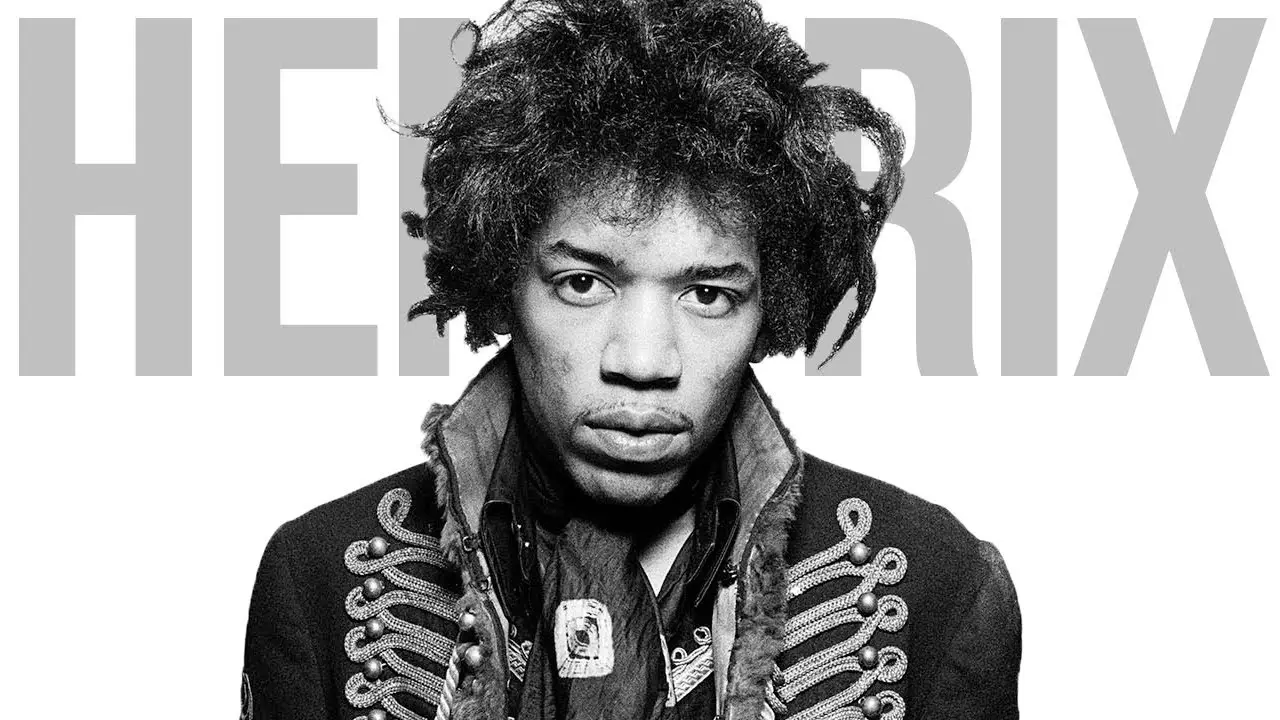
The most famous Jimi Hendrix hairstyle was a natural afro that he once described as a “Mod Shirley Temple.” It became a defining visual symbol of 1960s counterculture, psychedelic rock, and the rising cultural confidence tied to the Black Power movement. His hair was not simply a grooming choice. It was a statement of identity, rebellion, and artistic freedom that matched the explosive sound of The Jimi Hendrix Experience.
Understanding Hendrix’s hairstyle requires more than describing a haircut. It involves looking at the natural hair texture, the grooming tools he used, and the cultural moment that shaped his image between 1966 and 1970. Today, the look still inspires musicians, stylists, and fans who want to capture the wild, expressive volume that defined his stage presence.
The Iconic Afro That Defined Jimi Hendrix
Table of Contents
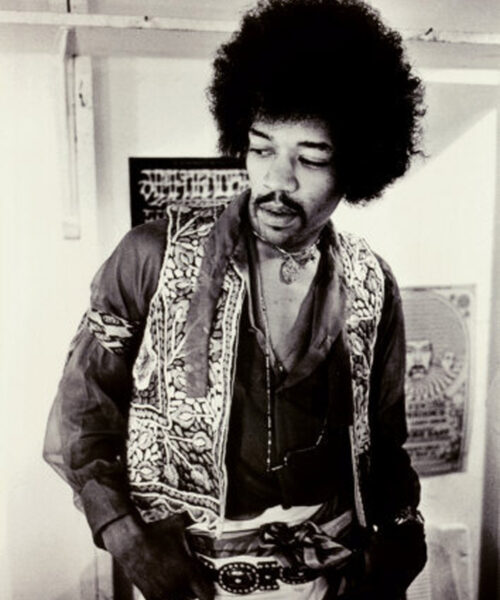
Jimi Hendrix’s hairstyle is best described as a free-form afro with high volume and loose structure. Unlike the perfectly sculpted afros that became popular in the late 1960s, Hendrix preferred a slightly untamed appearance. The curls expanded outward into a rounded halo shape that framed his face and guitar performances.
In interviews, Hendrix once referred to his hair as a “Mod Shirley Temple.” The phrase captured the combination of tight curls and frizzy texture that gave the hairstyle its signature look.
Several defining features made the Hendrix afro distinctive:
- Natural texture: Dense, tightly curled hair forming a large halo.
- Loose structure: The shape was not perfectly symmetrical or sculpted.
- Visible volume: Hair lifted away from the scalp using afro picks.
- Frizzy edges: The curls were allowed to expand naturally instead of being smoothed.
This raw, energetic aesthetic matched Hendrix’s improvisational guitar style. Just as his solos broke musical conventions, his hair rejected strict grooming rules.
Cultural Power Behind Hendrix’s Hair
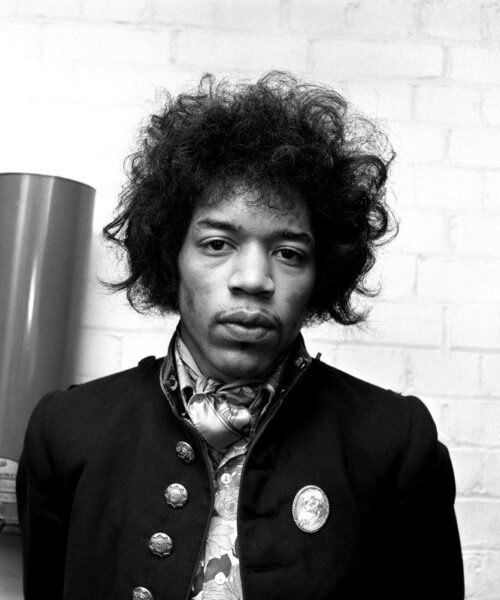
The afro hairstyle became culturally significant during the late 1960s. For Black musicians and artists, wearing natural hair symbolized pride, autonomy, and resistance to earlier expectations of assimilation.
Hendrix’s hair therefore carried meaning beyond fashion. It intersected with major cultural forces:
- 1960s counterculture: A rejection of rigid social norms.
- Black Power movement: Embracing natural Black identity.
- Psychedelic rock aesthetics: Bold visuals, expressive fashion, and unconventional styling.
While Hendrix did not position himself as a political spokesman in the same way as some contemporaries, his visual identity naturally aligned with these movements. His afro, military jackets, and crushed velvet outfits created a style that felt rebellious yet artistic.
The combination became instantly recognizable. When fans imagine Hendrix performing “Purple Haze” or playing the national anthem at Woodstock, the wild halo of hair is always part of the image.
Early Hairstyles Before the Afro
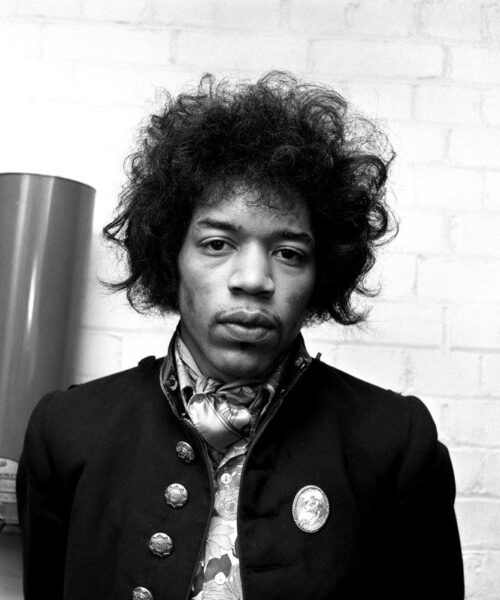
Before becoming a rock icon, Hendrix wore a very different hairstyle. During his early career on the Chitlin’ Circuit, he performed as a backing guitarist for R&B artists. The industry expected musicians to present a clean and conservative image.
At that time, Hendrix often wore a conk, a chemically straightened hairstyle popular among Black male performers in the 1950s and early 1960s. The hair was slicked back and closely shaped, resembling styles worn by Little Richard and other rhythm-and-blues stars.
This look contrasted sharply with the afro that would later define him. The transition represented both personal freedom and a broader shift in cultural identity during the late 1960s.
The London Transformation
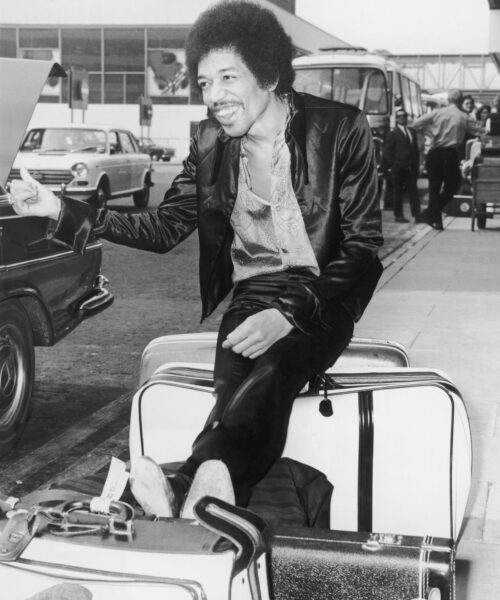
Hendrix’s definitive hairstyle emerged after he moved to London in 1966 and formed The Jimi Hendrix Experience with Noel Redding and Mitch Mitchell. London’s music scene encouraged experimentation in both sound and appearance.
A famous photograph from 1967 shows the band at Sweeney’s Hairdressers in London. The visit highlights how important grooming and visual identity were to the emerging psychedelic rock movement.
During this era, Hendrix began allowing his natural curls to grow outward into the rounded afro shape that fans recognize today. The hairstyle became larger and wilder as his fame expanded.
Accessories That Completed the Look
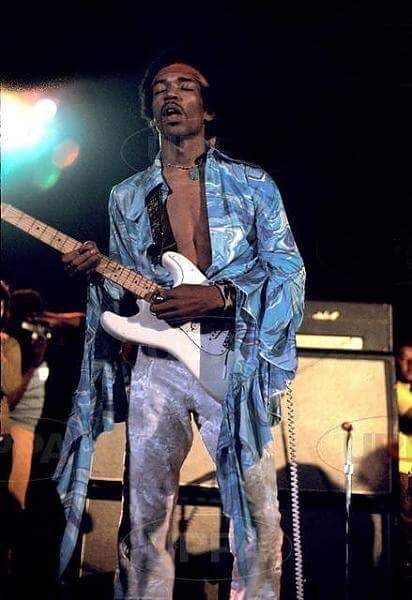
Hendrix rarely appeared on stage with only his afro. Accessories were a key part of his visual style and helped define the silhouette of his hair.
The most common additions included:
- Bandanas and headbands: Often tied low across the forehead so the hair spilled over the top.
- Wide-brim hats: Vintage felt hats, sometimes decorated with feathers or brooches.
- Military jackets and crushed velvet: Dramatic textures that contrasted with the soft volume of his hair.
The bandana became especially iconic. The fabric helped control the front section of his hair while allowing the rest of the afro to expand around it. This created the dramatic “spilling” effect visible in many stage photographs.
How Hendrix Maintained His Afro
Maintaining a large afro required regular grooming even if the finished look appeared effortless. Hendrix relied on a few simple tools and techniques.
Key maintenance practices included:
- Afro picks: Used to lift curls from the roots and create volume.
- Wide-tooth combs: Prevented tangling without damaging tight curls.
- Moisturizing products: Oils and conditioners kept the hair hydrated and defined.
Many stylists believe Hendrix likely used Afro Sheen products, which were widely popular during the late 1960s. Modern alternatives such as Pattern Beauty Leave-In Conditioner or curl creams from SheaMoisture can provide similar hydration while maintaining volume.
Tools also matter when shaping the halo effect. A large pick such as the Chicago Comb Model 11 Carbon Fiber XL Hair Pick helps lift curls without creating static or breakage.
How to Recreate the Jimi Hendrix Hairstyle Today
Modern barbers and stylists often treat the Hendrix afro as a natural volume style rather than a precise haircut. The goal is to create lift, texture, and a rounded silhouette.
For Naturally Curly or Afro-Textured Hair
- Grow the hair to medium length to allow a full halo shape.
- Use an afro pick to lift curls gently from the roots.
- Apply leave-in conditioner or curl cream for moisture.
- Avoid over-shaping the edges to keep the look relaxed.
For Straight or Wavy Hair
- Consider a tight professional perm to create dense curls.
- Use a small curling wand to produce tight curls.
- Brush the curls lightly with a wide-tooth comb to build volume.
- Finish with a bandana or hat for authenticity.
Bandanas similar to those Hendrix wore can still be found from traditional American manufacturers such as Carolina Have A Hank. Wide-brim hats from brands like Stetson also match the vintage stage aesthetic.
The Lasting Influence of Hendrix’s Hair
Jimi Hendrix’s hairstyle remains one of the most recognizable looks in music history. The afro symbolized individuality and creative freedom at a time when rock music was redefining cultural boundaries.
More importantly, the style reflected a broader shift toward embracing natural Black hair. In the decades since Hendrix’s career, the afro has continued to represent pride, authenticity, and cultural heritage.
Today the Hendrix afro still appears in fashion editorials, music videos, and tribute performances. Its enduring appeal comes from the same qualities that defined Hendrix himself: bold expression, effortless confidence, and a refusal to follow conventional rules.
