

Making pigtails even sounds like one of those things that should be simple… until you’re standing in front of a mirror wondering how one side ended up higher, tighter, and somehow fuller than the other. We’ve all been there. One pigtail looks perfect. The other looks like it wandered off on its own journey.
The good news? Even pigtails aren’t about luck or having “good hair hands.” They’re about a few repeatable techniques that professionals use every day. Once you understand why pigtails go uneven, fixing them becomes much easier—and a lot less frustrating.
This guide breaks everything down in a realistic, human way. No robotic steps, no overcomplication. Just the methods that actually work, whether you’re styling your own hair, a child’s hair, or someone else’s.
Why Pigtails End Up Uneven in the First Place
Table of Contents
Before fixing the problem, it helps to understand it. Uneven pigtails usually come from three things: a crooked part, mismatched height, or uneven tension. Sometimes it’s all three at once.
Your face and head aren’t perfectly symmetrical (nobody’s is), so eyeballing placement almost always leads you slightly off. Add in different hair growth patterns, cowlicks, or one side being naturally thicker, and suddenly your pigtails are fighting you.
The key is using physical guides instead of guessing. Your hands, comb, fingers, and facial landmarks do most of the heavy lifting when you let them.
Start With a Center Part That’s Actually Centered
If the part is off, the pigtails will never be even. You can adjust height all day, but a crooked part sabotages everything.
The easiest way to find the true center is to use your face, not the mirror. Place the tip of a rat-tail comb right at the center of the nose and draw the line straight back toward the crown. Don’t rush this. Small corrections at the front matter more than you think.
The back of the head is where things usually go wrong. Instead of guessing, place your finger at the exact center of the nape—right at the bottom of the hairline—and draw upward until it meets the front part. This front-to-back connection is what makes the part feel balanced from every angle.
If flyaways or thick hair make the line look fuzzy, lightly dampen the roots or use a tiny amount of lightweight gel along the part before gathering the hair. A clean part creates instant visual symmetry.
Matching Height Without Measuring Tools
Once the part is solid, height becomes the next challenge. This is where most people rely on vibes—and that’s why pigtails end up uneven.
A reliable reference point is the ears. For classic pigtails, gathering the hair level with the top of each ear keeps things balanced and age-appropriate for most styles. Higher pigtails need more precision, but the concept stays the same.
After securing the first pigtail, don’t rush to tie the second. Use your fingers to measure the distance from the base of the first elastic to the center part. Keep that exact finger width and mirror it on the other side before tying anything off. It feels a little silly, but it works shockingly well.
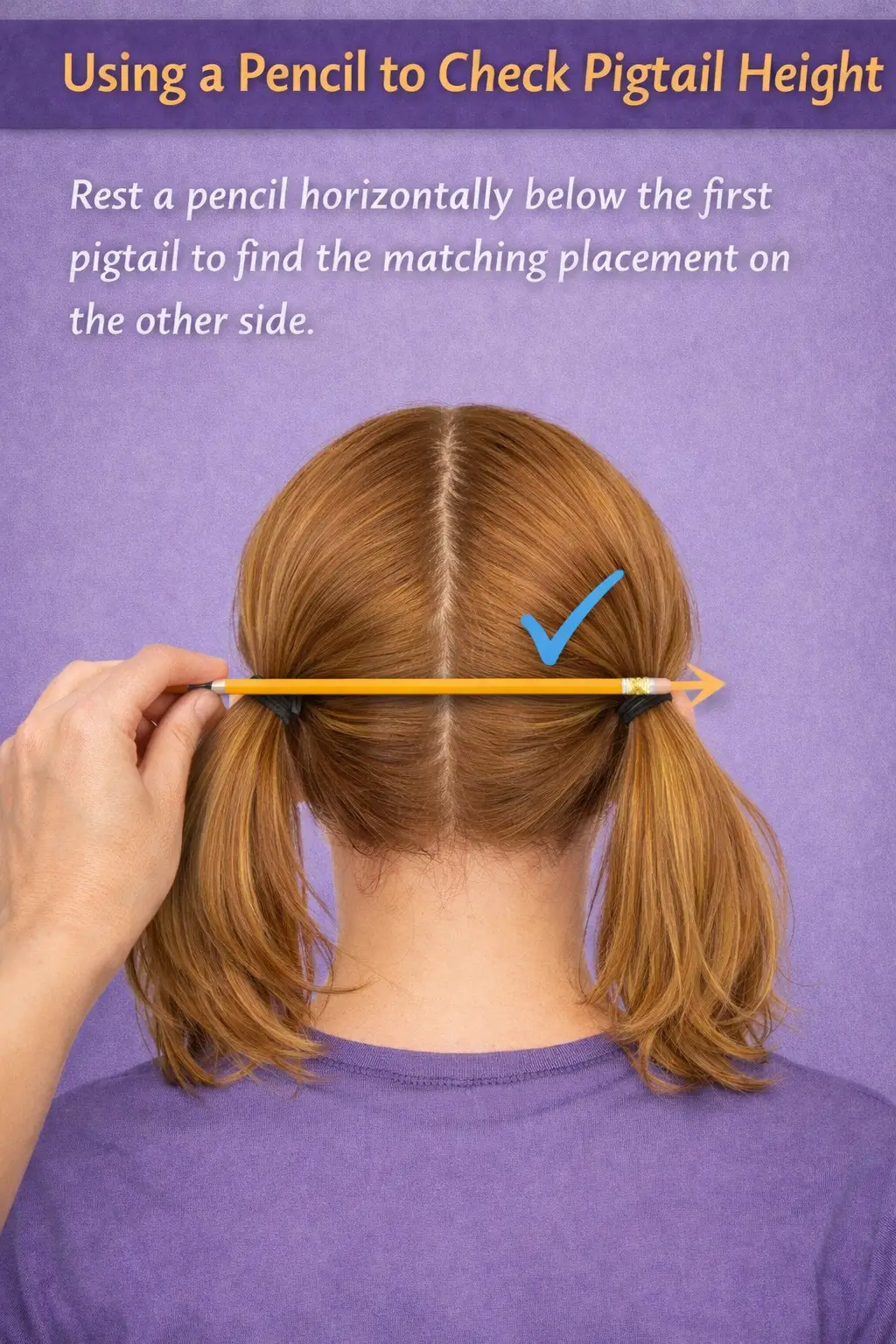
If you want a more pro-level check, hold a long comb or even a pencil horizontally across the head, resting it at the base of the first pigtail. That straight line shows you exactly where the second one should sit.
Tension Matters More Than You Think
Sometimes pigtails are technically even, but they don’t look even. That’s almost always a tension issue.
If one side is pulled tighter, it will sit higher and look sleeker. The looser side will droop and look fuller, even if the placement is correct. This happens a lot when doing your own hair because one arm has better leverage than the other.
As you gather the hair, slow down. Comb through each section while holding it to remove bumps before adding the elastic. Pay attention to how tight your hand feels on each side.
Here’s a small trick that makes a big difference: when securing the second pigtail, tilt your head slightly away from that side. It naturally creates even tension and helps prevent over-pulling.
For children or toddlers, keep tension lower overall. Tight pigtails may look neat at first, but they can stress the hairline and actually make asymmetry more noticeable once the child starts moving around.
Fixing Uneven Pigtails Without Starting Over
This is where real-life styling wins over perfectionism. You don’t always need to take everything out and redo it.
If one pigtail is slightly lower, try the split-and-pull method. Divide the hair below the elastic into two sections and pull them firmly outward toward the scalp. This cinches the elastic tighter and can “hop” the pigtail slightly higher without retying it.
If one side looks thinner, don’t panic. Lightly tease the thinner side at the base or use a small amount of texturizing spray. Volume can create the illusion of symmetry even when density isn’t identical.
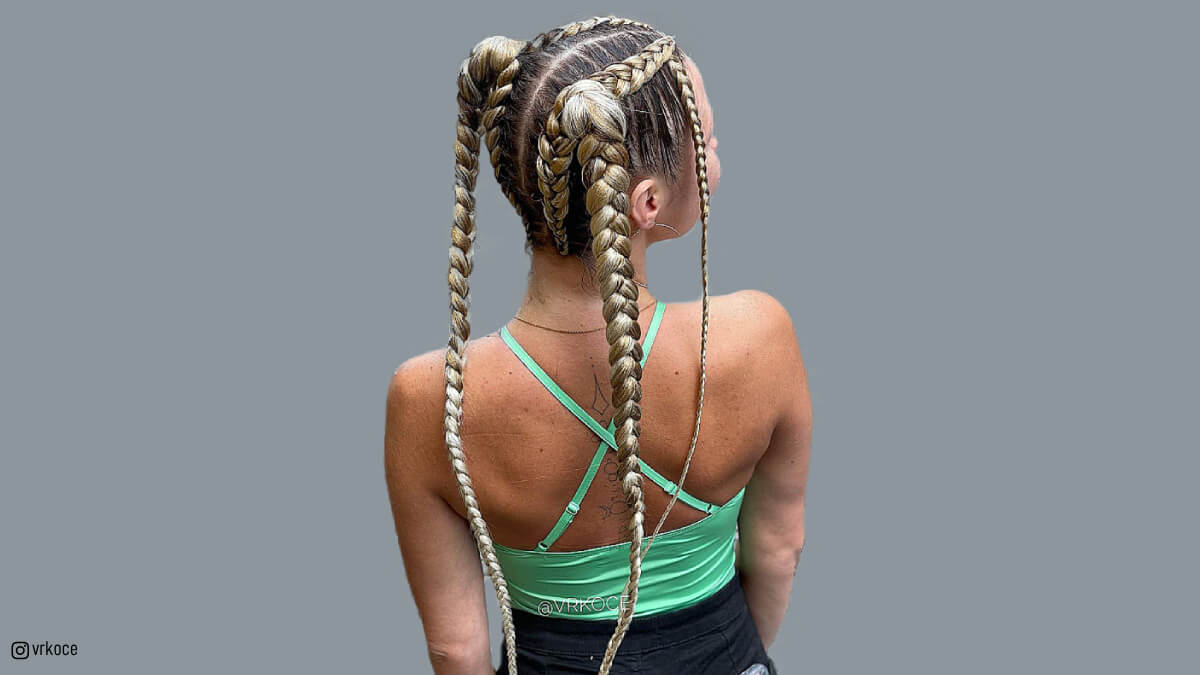
Braided pigtails bring their own issues. If you notice uneven length at the ends, you don’t need to restart. Combine two smaller braid sections and split the thickest section in half as you continue. It subtly balances the remaining length and evens things out by the time you reach the bottom.
Professional Placement Checks That Actually Help
Most people only check pigtails from the front. That’s a mistake. Pigtails can look perfect straight-on but sit unevenly from the side or back.
Turn your head side to side in the mirror and check the profile. One pigtail often sneaks farther back than the other, especially on longer hair. Using your finger, measure the distance from your temple to the elastic on each side. They should feel the same.
If you really want to be precise, use two mirrors—one in front and a handheld mirror behind you at a slight angle. This makes it much easier to see whether the back part is straight and centered.
Getting Salon-Level Symmetry
If you want truly polished pigtails, sectioning makes a huge difference. A professional quartering method prevents you from accidentally stealing hair from the back or overloading one side.
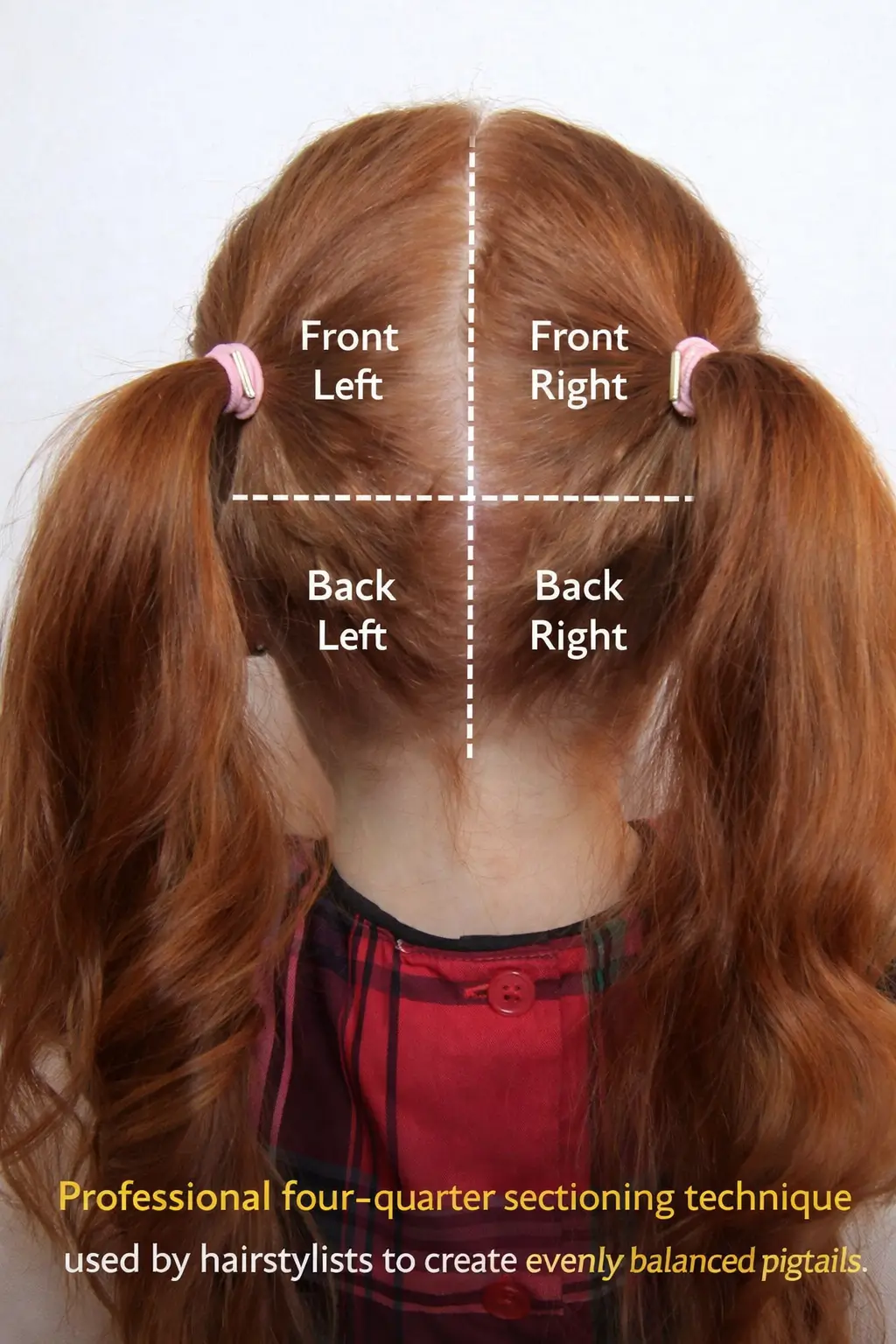
Create a vertical part from the bridge of the nose to the center of the nape. Then add a horizontal part from the crown down toward the top of each ear. Clip each section separately. It takes an extra minute, but it ensures equal distribution and cleaner results.
For high pigtails, facial landmarks help more than you’d expect. The base of each pigtail should align diagonally with the arch or tail of the eyebrows. When those angles match, the style reads as balanced even if your head isn’t perfectly symmetrical.
Finishing Touches That Hide Tiny Imperfections
Even when placement is good, small finishing choices can elevate the whole look.
Wrapping a small strand of hair around each elastic hides differences in band size or placement and instantly makes the style look intentional. Secure the wrapped hair with a pin underneath the pigtail so it stays invisible.
If one side still looks flatter, gently tug at the outer edges of the ponytail or braid—a technique often called “pancaking.” This fans out the hair slightly and creates the illusion of equal fullness.
For sleek styles, dampening the roots before brushing helps prevent bubbles and lumps near the elastic. If the base looks too puffy after tying, firmly pull the hair at the root downward to snug it closer to the scalp. It’s a simple fix stylists use all the time.
The Real Secret to Even Pigtails
Perfectly even pigtails aren’t about perfection. They’re about consistency. Using the same guides, the same tension, and the same checks every time gives you predictable results.
Once you stop relying on the mirror alone and start using your hands as measuring tools, pigtails become much easier—and honestly, kind of satisfying to do. The more you practice these techniques, the faster and more natural they feel.
And if one side is still a millimeter off? Don’t stress. Most people will never notice. But you’ll know how to fix it if they do.
